
April 12, 2026, Nathalie Van Renterghem
The topic of healthcare and the hashtag #CultureAndHealth, received full attention in March.
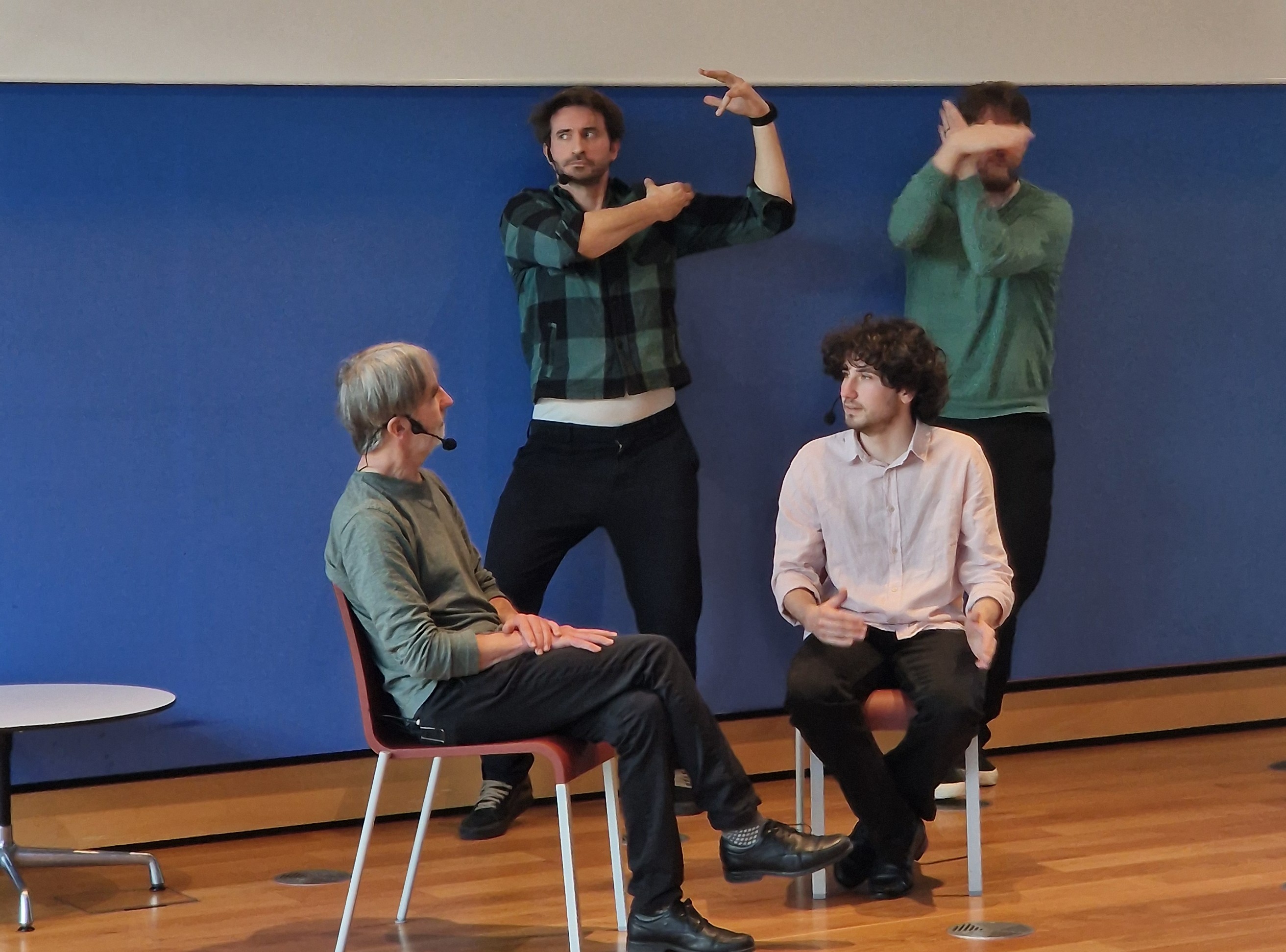
The month before, on Valentine's Day, we played our performance ‘It Will Be Well! at the beautiful Wagehuys in Leuven. It was the first time we played it for a wide audience. It is our most played theme in recent years. After all, in companies and organizations well-being is at the top of themes that deserve attention - and for which an employer is also obliged to undertake business. The hall was finely packed and the reactions were warm and laudatory.
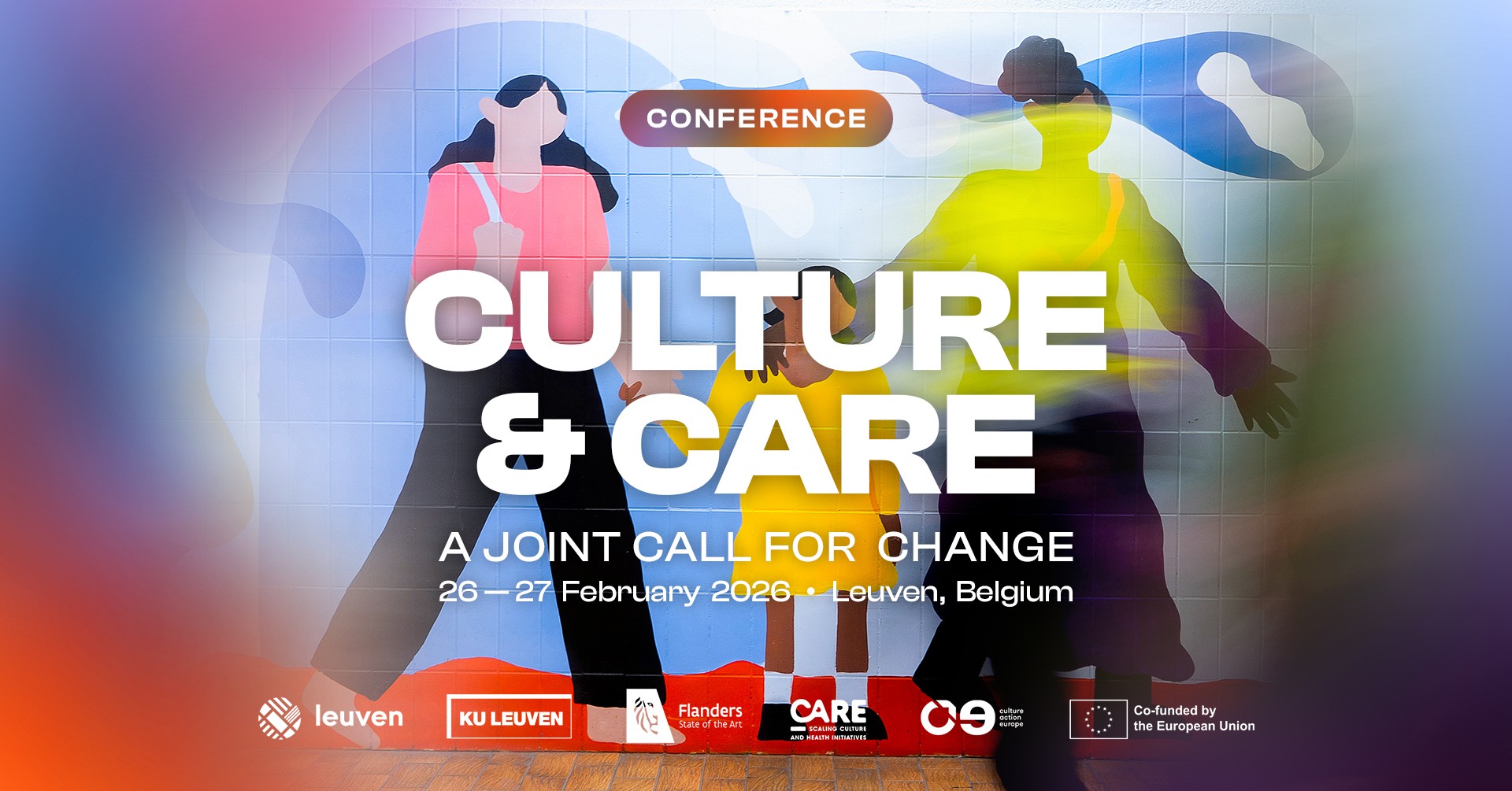
A few days after that performance, I happened to see the announcement pass by of the Culture & Care festival in Leuven. My first reflection, or that of my ego, was that it was almost absurd that we with Inspinazie had not been asked to participate in one of the many many workshops. Or to ‘It Will Be Well! or Take Care play.
After all, this is our profession: working toward greater people skills and a stronger relational fabric, through an artistic medium. Moreover, we do it so often in the healthcare sector that a lot of people think we are That Care Improvisation Group are.
In March alone, we played 5 healthcare performances, for and about:
- young carers
- supervisors of people with disabilities
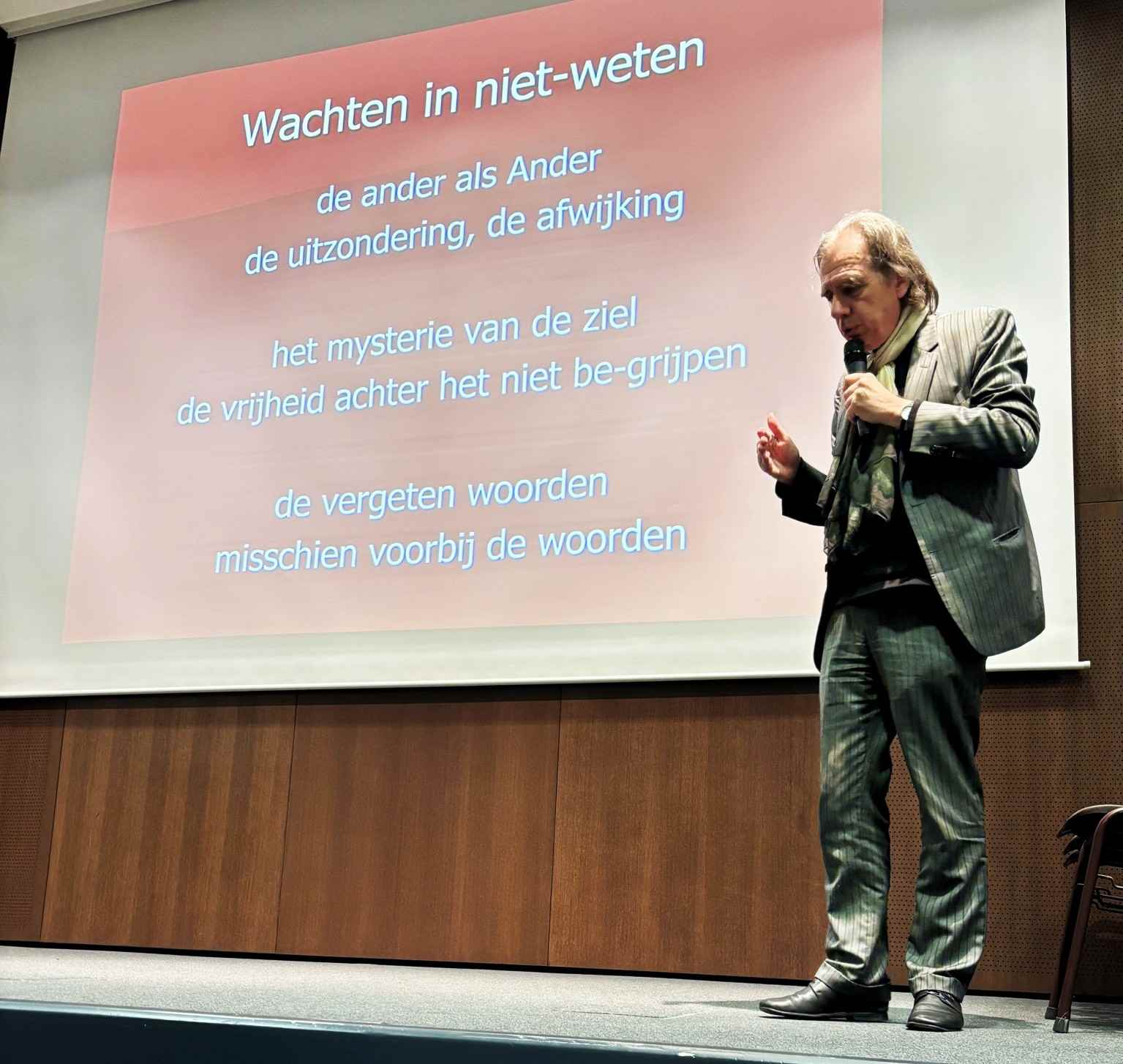
- the topic of time in psychiatry (with the ever-inspiring Dirk De Wachter)
- possibility thinking in home care
- team cohesion in residential care centers.
Back to Culture & Care. I picked up a day of the festival last-minute. There was an exuberant atmosphere. It was a vibe like I know from other participatory conferences or trainings. They are often called festivals. I do the same with my colleagues from the Conflict Festival . The breaks were long, leaving room for spontaneous and informal connecting. There was singing and dancing together. It was a rich and engaging program in content and form.
I was somewhat taken aback by the glorification of the conventioneers in terms of groundbreaking in ideas and atmosphere. I understood the enthusiasm for the atmosphere, and I can see that there are fields where this is anything but commonplace. Throughout the day, however, an impatient voice wiggled on my shoulder, especially in terms of content: “Yes bon, this is all mostly the description of socio-artistic and socio-cultural work anyway. Hot water being invented again?” Possibly something is still being overlooked. More than once a conclusion was that the truly healing the affiliation was created by collective art experience. Aren't art and culture primarily (wonderful!!) vehicles for building relational and social fabric? Doesn't the fear of the instrumentalization of art stand in the way of this realization? See also theFebruary art blog. One of the students who gave a closing reflection pointed out that fundamental relational aspect, and what can be learned about it from queer communities.
The lack of green also surprised me. The poster had all colors except green. The tree in the original drawing was blotted out. There were only a few sessions that were about nature. If in 2026 nature are not going to radically and fundamentally integrate when we talk about culture and care, then we are plainly looking away from the world. That was the voice on my other shoulder.
Perhaps it was a political choice. After all, the congress was also a call to policymakers to open their wallets. Green and the collapse of our organic world is unfortunately repellent to current majorities. Even if that results in economic collapse, and even if that is already in full swing.
But even without green, questions arise. How will care and culture benefit from a tug of war for resources by ignoring what already exists? Both care and culture are being cut hard right now. It was quite wry a few days after Caroline Gennez (Minister of Culture and Welfare) said in one of the endnotes that we are already rich in initiatives and should map them out well, the petition seen going around about limiting resources of the amateur arts.
From the petition:
“Amateur arts are not a luxury. They are not a fringe activity. They are the foundation of our cultural community and society. The amateur arts are often the first place where someone discovers what art can do. For a child who is on a stage for the first time. For someone reconnecting with their passion after a difficult period. For a newcomer who gets to know a community through music, dance, art or theater. It is cultural education in practice. It is low-threshold cultural participation. Amateur art is culture and well-being reinforcing each other.”
What I found very strong about the festival was its focus on culture “in the place of” pills. The festival brought impressive testimonials on this and offered a wealth of references and expertise. It is just in curative, specialized care that much more persuasion is needed. Only it would be unfortunate that this comes at the expense of healthprevention through culture. Or if the two are pitted against each other instead of fertilizing each other.
The best doctor is the one who keeps you healthy before you get sick. Shout out at this to CM which renamed itself from health insurance fund to health fund a few years ago.
In any case, I found it a relief that Karin Moykens, Secretary General of the Department of Care, explicitly addressed the social workers in the room in her speech. She also asked them to make themselves known. Not even five hands went in the air. Missed target audience at this festival? “It's exactly you we need,” she said.”
Paul Silbanks, cultural policy maker for the island of Jersey, hit the nail on the head: “We don't need new big institutions, we need link-makers. It is the fabric between initiatives and organizations that needs to be strengthened.
Inspired by this, I spent a lot of time during the month of March putting my money where my mouth was. I woke up dormant memberships and connecting ideas.
- I was beginning to find my way around what is replacing the Leuven Cultural Council: a kind of sectoral linkedin digital network. Makes me frown, but ... explore further.
- We inquired with regard to how that was again about Leuven 2030. We had lost sight of that since our performance 22 Questions several years ago, the precursor to Moe/d. We mapped out our actions over the past few years, made agreements for subsequent climate-friendly interventions, and signed the Leuven Climate Contract on May 19.
- I participated for the first time in an event of Leuven Mindgate, which we recently joined.
- We finally became cooperators with TIM Theater / Inspinazie of Ecoob and Ecopower.
- We are planning a refresh of our studio, and the organization in it of more accessible improv activities.
- We ensured greater visibility of accessibility to our activities with the Leuven UiTpas opportunity fee.
- I noted with a bullet in my calendar the meeting in Leuven for the second edition of the wonderful Neighboring country festival.
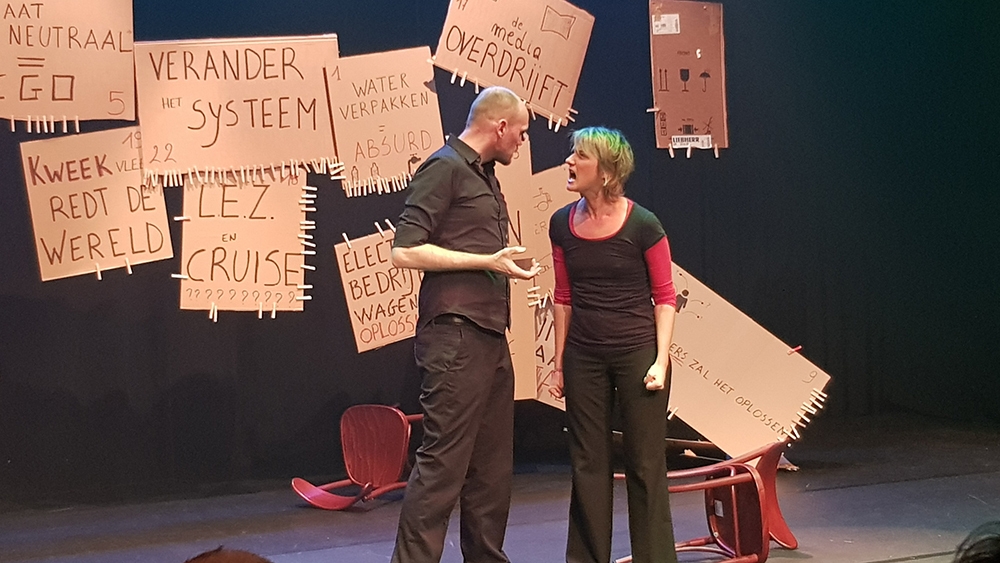
The Culture & Care movement offers a lot of opportunities. It puts language in the world and puts frameworks first that may not always be familiar. Practitioners are not so concerned with theoretical musings. Academics sometimes forget to first examine what already exists and works when they send ideas out into the world as innovative. It is important for academia and cultural practitioners to appreciate and embrace each other more. And that grantmakers put an end to the obsession with innovation. Just as in improvisational theater: the stories are already there, they just need to be embodied, interpreted and connected.
My own heart made leaps like this several times in recent weeks.
- Via Dear Nails, initiator of Art on Referencein Leuven, I became actively involved in the network of the same name. I provided a session of improvisational theater in the latest edition of an arts workshop series, populated with participants at the suggestion of doctor or therapist. The open-offer courses we teach, both those at Wisper and Living Impro, regularly include people who have been led there by a health care provider, for a variety of reasons. To reduce social anxiety. To be less in the head. To de-stress. To develop a more positive outlook. I always think then, “What a cool doctor.” How great would it be if that became more mainstream! If all healthcare professionals became familiar with Arts on Prescription, or the broader Social Prescribing (movement, nature, culture). I would love to work on that. I love that such an initiative comes from physicians themselves, like from Lieve. From a doctor. How clean is it that the Dutch word for doctor (physician from the Greek iatēr) is the same as the English word for art (doctor from the Latin ars).
- Through the network and thanks to Bob Selderslaghs for the dedication, I was introduced to Teaching Artists. That's a global network that reminds me a lot of the Applied Improvisation Network, but with, at first glance, a more socially oriented angle. Their annual world congress is taking place this year in Antwerp in August, I'm definitely going to visit!
- I attended a webinar by Sofie de Smet On the healing power of theater in trauma. What she said was so rich and resonated so hard with the way we set up our most participatory formulas (Swarm, TIM XL). It is wonderful when what you know from your own practice how and that it works is explained so concretely by a theater scholar who studies it broadly and in depth. It provides a framework for working in a much more focused and refined way.
March for me was a huge boost in and recognition of the caring and healing aspect in our work with improvisational theater. A heart boost because we were also personally facing a heavier facet of “caring” in our team. The improvisational mindset in that has come up many times. Hereby a soft warm “Cheers” to the healing power of art ánd of pills!
Supplementing the text is a list full of inspiration in which art experience and (mental) health prevention and/or healing are central, implicitly or explicitly, therapeutic without being therapy:
- Our own Living Impro courses - Mindfulness in Interaction
www.livingimpro.be - I-strengthening improvisational theater for young people at JUP asbl.
- Are you a physician or therapist in Leuven and would like to refer people to an art therapy program with extra care and attention to well-being in the group and for the individuals. https://www.kunstopverwijzing.be/voor-zorgprofessionals
- Read more about Arts on Prescription or about Social Prescribing
- For those waiting for psychiatric care: the Waiting House in Haacht. With a formal and informal range of activities including artistic. https://www.hetwachthuis.be/werking
- Sculpture Studio The FactorY “The social-artistic sculpture studio The FactorY welcomes artists who, for various reasons, lack a connection to what is offered within the regular arts circuit. Often - but not necessarily - this is because of social and/or psychological vulnerability.
https://www.de-y-factor.be/over-de-y/factory - WHO report on art and health - https://www.who.int/europe/publications/i/item/9789289054553
“This report synthesizes the global evidence on the role of the arts in improving health and well-being, with a specific focus on the WHO European Region. Results from over 3000 studies identified a major role for the arts in the prevention of ill health, promotion of health, and management and treatment of illness across the lifespan.”
Feel free to pass on your additions.